
Your streaming setup needs a foundation that works. An IPTV encoder transforms your video content into digital streams that travel across networks. This technology powers hotel TV systems, corporate communications, and broadcast operations across the United States.
When you choose a professional IPTV encoder, you’re making a smart business decision. Your streams stay stable. Your video quality stays consistent. Your viewers stay satisfied. That’s what separates enterprise solutions from basic equipment.
Investing in reliable streaming solutions protects your broadcast operations. Downtime costs money. Poor quality damages your brand. A professional IPTV encoder prevents these problems before they start. Your content reaches every screen in perfect condition, every single time.
This guide shows you what separates quality equipment from mediocre choices. You’ll learn why your professional IPTV encoder matters for scaling your operation. You’ll discover the features that make a real difference in performance and reliability. Your streaming infrastructure deserves equipment that delivers results.
Table of Contents
What Is an IPTV Encoder and Why It Matters for Your Streaming Setup
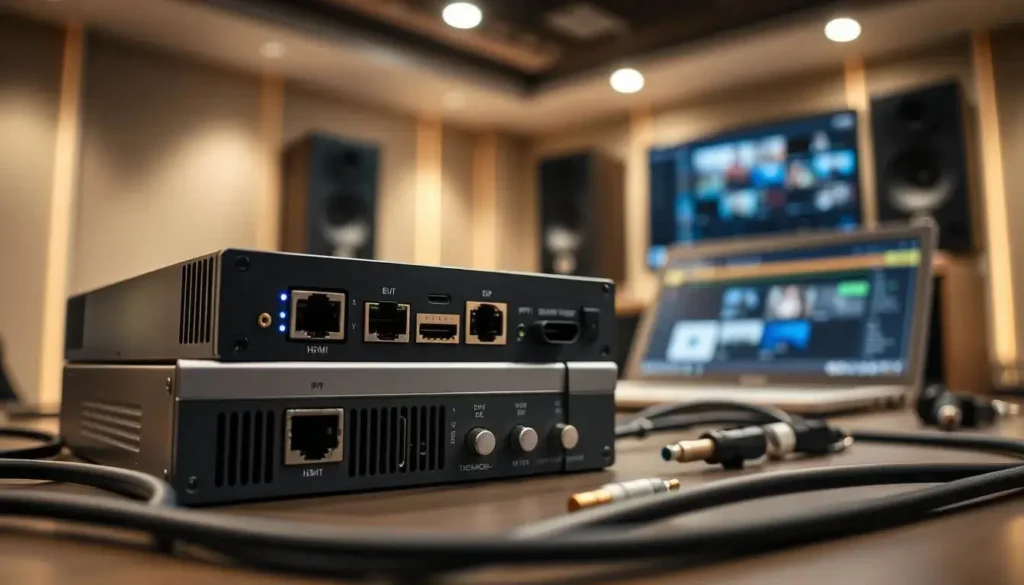
An IPTV encoder is the bridge between your traditional video equipment and your network-based streaming infrastructure. This device takes video signals from sources like cameras, media players, or computers and transforms them into digital streams that travel across your network. Understanding how this technology works helps you build a reliable streaming system that reaches multiple devices at once.
Your video encoder for streaming serves a critical role in modern broadcast operations. It captures raw video and audio signals, compresses them into manageable file sizes, and packages everything into formats that networks can handle. This process happens quickly and continuously, making real-time video encoding essential for live events, corporate communications, and entertainment distribution.
Understanding the Core Function of Video Encoding
Video encoding is the process of converting raw video data into a compressed format suitable for transmission. Your video encoder for streaming balances two competing needs: maintaining picture quality while reducing file size. The encoder uses mathematical algorithms to eliminate redundant information from each video frame.
The encoding workflow includes several key steps:
- Receiving video and audio signals from your source equipment
- Converting analog signals into digital data
- Compressing content using industry-standard codecs
- Adding metadata and timing information
- Packaging the stream for network transmission
Real-time video encoding happens instantly, allowing viewers to watch content with minimal delay. This immediate processing makes it perfect for live broadcasts, sports events, and interactive presentations where timing matters.
How IPTV Encoders Convert HDMI Sources to IP Streams
HDMI to IP conversion is the technical heart of modern IPTV systems. Your encoder accepts HDMI input from virtually any video source—cameras, computers, media players, or broadcast equipment—and transforms that signal into an IP stream that travels through your network.
Here’s what happens during the conversion process:
- Your HDMI source cable plugs directly into the encoder’s input port
- The encoder detects the video resolution, frame rate, and audio format
- Compression algorithms reduce the data size using H.264 or H.265 codecs
- The compressed stream gets packaged into IP protocols like RTP or RTMP
- Your network distributes the stream to compatible devices
- Smart TVs, tablets, computers, and set-top boxes receive and display the content
This approach lets you leverage equipment you already own. Your existing HDMI devices become network-based streaming sources without requiring expensive replacements. Real-time video encoding ensures smooth playback across all connected devices simultaneously.
The beauty of HDMI to IP conversion is its flexibility. You can distribute one source to hundreds of viewing devices. You can also centralize control of your entire video infrastructure from a single location, making management simpler and more cost-effective for your organization.
The Benefits of Using Professional Hardware Encoders for Live Streaming
When you’re broadcasting live content, your reputation depends on quality and reliability. A live streaming encoder built on dedicated hardware gives you advantages that software-based solutions simply cannot match. Unlike computers that juggle multiple tasks, dedicated encoding hardware focuses entirely on one job: converting your video signals into streams that reach your audience perfectly.
Professional hardware encoders eliminate the frustrating problems that plague software alternatives. Your streams won’t stutter when your computer handles other tasks. You won’t experience dropped frames during critical broadcasts. The dedicated chips inside your hardware encoder iptv system work continuously without crashes or interruptions, keeping your stream stable for hours.
Your bandwidth costs drop significantly with advanced compression technology built into professional systems. Dedicated encoding hardware delivers superior video quality at lower file sizes, meaning you reach more viewers without expensive infrastructure upgrades. You can scale your broadcast to hundreds or thousands of devices simultaneously without worrying about your network collapsing.
Here’s what professional hardware encoders deliver for your business:
- Lower latency for interactive content and live events where timing matters
- Centralized management from a single location instead of scattered software solutions
- Multi-platform compatibility across television sets and mobile devices
- Consistent performance during long-duration streams without quality degradation
- Reduced IT troubleshooting and system maintenance demands
- Support for 4K content and multi-camera productions
When you invest in a live streaming encoder with dedicated hardware, you’re protecting your broadcasts from the unpredictable failures that damage your credibility. Your streams stay online, your viewers stay happy, and your team stays focused on content rather than technical problems.
Key Features to Look for in a Reliable IPTV Encoder
Choosing the right digital video encoder for your streaming setup requires understanding several critical technical specifications. Your investment in encoding equipment should reflect your current needs while allowing room for growth. The following features help you evaluate which IPTV encoder best matches your broadcast goals and infrastructure.
Codec Support: H.264 vs H.265 Compression
The codec you select determines how efficiently your video content travels across networks. An h.264 encoder remains the industry standard, offering universal device compatibility and widespread adoption across platforms. This compression technology has proven reliable for nearly two decades.
H.265 (HEVC) compression technology, by contrast, delivers approximately 50% better video quality while using less bandwidth. This means you can stream higher-quality content using your existing network resources. Your choice depends on your viewer devices—older equipment may lack H.265 support, while modern systems benefit from its efficiency gains.
| Feature | H.264 | H.265 (HEVC) |
|---|---|---|
| Compression Efficiency | Standard baseline | 50% better compression |
| Device Compatibility | Universal support | Limited on older devices |
| Bandwidth Requirements | Higher consumption | Reduced consumption |
| Video Quality | Good quality | Superior quality at same bitrate |
Resolution Capabilities and Bandwidth Efficiency
Your resolution choice impacts both viewer experience and network demands. A digital video encoder supporting 1080p Full HD meets most broadcast requirements with manageable bandwidth usage. If your infrastructure and distribution network support higher capacity, 4K capability future-proofs your investment.
Consider these resolution factors:
- 1080p streams require approximately 4-8 Mbps bandwidth depending on frame rate
- 4K streams demand 15-25 Mbps or higher for quality output
- Your network infrastructure must accommodate peak bandwidth needs
- Storage requirements scale significantly with resolution choices
Network Protocol Compatibility for Seamless Distribution
Your streaming protocols determine how content reaches viewers across different environments. Multiple protocol support ensures your encoder integrates smoothly with existing systems.
Essential streaming protocols include:
- UDP – Enables low-latency local distribution for live broadcasts
- RTSP – Provides flexible streaming applications across diverse platforms
- HTTP – Ensures broad device compatibility and firewall-friendly delivery
- RTP – Supports real-time protocol transmission for professional environments
- Multicast – Delivers efficient one-to-many distribution reducing bandwidth strain
- SRT – Offers secure internet streaming with built-in encryption
Your encoder must support the specific streaming protocols your distribution network requires. Hotels, corporate networks, and hospitality systems each demand different protocol combinations. Verify compatibility before purchasing to avoid costly integration problems.
Selecting an encoder with comprehensive protocol support prevents future limitations as your broadcast needs expand.
How IPTV Encoding Technology Works in Real-Time Broadcasting
Understanding the real-time video encoding process helps you grasp what happens behind the scenes when you stream live content. Your broadcast encoder takes raw video signals and transforms them into deliverable streams that reach viewers instantly. This complex operation involves multiple processing stages working in perfect sync to maintain quality while managing bandwidth efficiently.
The live encoding process begins the moment your video source connects to the encoder. Your HDMI input carries uncompressed video and audio data—massive amounts of information that requires transformation. A professional broadcast encoder accepts this raw feed and immediately begins digitizing the signals into a format the encoder can manipulate and compress.
Your real-time video encoding system works through several essential stages:
- HDMI signal reception from source devices
- Digitization of video and audio signals
- Data compression using H.264 or H.265 codecs
- Stream packaging into IP protocols
- Network transmission to distribution points
- Decoding and display on end-user devices
The compression stage defines your broadcast encoder’s performance. Modern codecs process millions of pixels per second while maintaining visual quality. Your encoder balances three competing priorities: keeping picture quality high, reducing bandwidth consumption, and minimizing latency below one second.
| Encoding Stage | Function | Impact on Quality |
|---|---|---|
| Signal Input | Receives HDMI signals from source | Determines initial signal quality |
| Digitization | Converts analog signals to digital format | Preserves original video fidelity |
| Compression | Applies H.264 or H.265 codec | Reduces file size while maintaining clarity |
| Packaging | Wraps stream into IP protocols | Enables network transmission |
| Transmission | Sends packaged stream over network | Ensures reliable delivery |
| Decoding | Client device decompresses stream | Determines viewer-side picture quality |
Your live encoding process must handle bandwidth constraints intelligently. Professional broadcast encoder technology adjusts compression ratios based on your network capacity. When bandwidth tightens, the encoder maintains acceptable quality by reducing frame rates or resolution rather than creating visible compression artifacts.
Understanding these technical steps empowers you to configure your encoder for your specific needs. Different applications demand different optimization approaches. Interactive applications require minimal latency even at slight quality trade-offs. Premium content distribution prioritizes visual quality over bandwidth savings. Cost-conscious deployments minimize bandwidth consumption while maintaining acceptable viewer experience.
Professional real-time video encoding equipment outperforms consumer-grade solutions because of superior processing power and codec efficiency. Enterprise broadcast encoder systems handle demanding HD or 4K content with frame accuracy, maintaining consistent quality across extended broadcast sessions. Your equipment investment directly impacts whether viewers see smooth, clear content or experience buffering and quality degradation.
Applications of IPTV Encoders Across Industries
An iptv encoder transforms video signals into digital streams that travel across networks. This technology serves many different sectors, solving real distribution challenges. Your industry likely needs reliable content delivery, and understanding how other fields use iptv encoder solutions can help you see possibilities for your own operation.
Organizations across the United States depend on iptv encoder systems to reach employees, guests, and customers with consistent messaging. The versatility of this technology means you can deploy it in ways that match your specific needs and budget constraints.
Hospitality and Hotel IPTV Systems
Hotels use hotel iptv systems to deliver cable channels, on-demand movies, and guest information directly to rooms. Your property can distribute live television, promotional content, and wayfinding information without expensive coaxial cables running through walls.
A hotel iptv setup reduces installation costs while enabling new revenue streams. You can display targeted promotions, local restaurant recommendations, and spa packages to guests in their rooms. Staff can update content instantly across all units, and guests enjoy better picture quality than traditional cable delivery.
- Broadcast live sports and breaking news
- Stream on-demand entertainment libraries
- Deliver property announcements and emergency alerts
- Display local advertising and revenue-generating promotions
- Enable interactive guest services and concierge functions
Corporate Communications and Training Networks
Your corporate environment needs efficient ways to reach employees across multiple locations. Corporate streaming through an iptv encoder lets you broadcast town hall meetings, training videos, safety information, and executive communications simultaneously to offices, break rooms, and mobile devices.
Employees see consistent messaging whether they watch on computers or lobby displays. You eliminate confusion from scattered communication methods and ensure everyone receives critical information at the same time.
| Industry Application | Key Benefits | Primary Content Types |
|---|---|---|
| Hotels | Guest satisfaction, cost savings, revenue generation | Live TV, on-demand, property information, promotions |
| Corporate Offices | Employee engagement, consistent messaging, efficiency | Training, meetings, safety updates, announcements |
| Educational Institutions | Remote learning, lecture accessibility, campus connectivity | Lectures, courses, campus announcements, events |
| Healthcare Facilities | Patient comfort, information delivery, operational efficiency | Entertainment, health education, wayfinding, schedules |
| Sports Venues | Audience engagement, viewing accessibility, analytics | Live games, replays, statistics, sponsorship content |
| Retail Spaces | Brand consistency, sales support, customer engagement | Advertisements, promotions, product information, announcements |
Corporate streaming deployments save money on satellite distribution fees. Your IT department gains central control over content distribution. Training departments reach remote workers instantly. Sales teams receive product updates in real time, and human resources can broadcast benefits information to all employees simultaneously.
The flexibility of industry applications through iptv encoder technology means you can scale your deployment as your organization grows. Whether you operate one location or dozens, the same technology adapts to your changing needs.
Hardware Encoders vs Software Encoders: Which One Delivers Better Performance
When you build a streaming setup, one of your biggest decisions involves choosing between hardware and software encoding solutions. This choice shapes your stream quality, reliability, and long-term costs. Understanding the real differences between these approaches helps you pick the right tool for your needs.
Software encoders like OBS Studio and vMix run on your computer’s CPU. They handle video compression alongside everything else your machine does. When your computer handles other tasks—processing graphics, running updates, or managing background applications—encoding performance suffers. Your streams experience dropped frames, quality drops, and stuttering. For short, casual streams, this might work. For professional broadcasting, these risks become serious problems.
A hardware encoder iptv solution works differently. It dedicates 100% of its processing power to video compression alone. Your computer stays free to handle other work. This separation means consistent, reliable streams regardless of what else runs on your system.
Here’s what separates these approaches in real performance:
| Performance Factor | Software Encoders | Hardware Encoders |
|---|---|---|
| Latency | 50-100ms typical | 20-50ms typical |
| Dropped Frames During Load | Common under CPU stress | Rare, optimized chips prevent drops |
| Stream Duration Capability | Degrades after 4-6 hours | Stable for 8+ hours continuously |
| Multiple Camera Support | Requires high-end CPU | Handles multi-camera setups reliably |
| Initial Investment | $0-500 | $1,500-5,000+ |
| Network Stability | Single connection, vulnerable | Bonded connections available |
Your choice depends on what you’re streaming. For revenue-generating content, professional events, or mission-critical communications, a hardware encoder for streaming ensures reliability. Churches broadcasting services, video creators managing multi-camera productions, gamers streaming long sessions, and event producers all rely on hardware solutions for consistent quality.
An encoding performance comparison reveals that hardware consistently outperforms software under pressure. Your investment in dedicated hardware pays dividends through fewer technical failures, better viewer experiences, and the ability to handle complex streaming scenarios with confidence.
Top Professional IPTV Encoder Solutions for Enterprise Deployment
When you run a large-scale broadcasting operation, you need enterprise encoding solutions that can handle multiple video sources without breaking a sweat. Your streaming infrastructure must be reliable, scalable, and capable of delivering content across different platforms. Professional IPTV encoder technology has advanced significantly, giving you powerful options that streamline complex deployments while maintaining broadcast quality.
Enterprise-grade encoders bring several advantages to your operation. You gain the ability to process multiple video feeds simultaneously, manage remote operations from anywhere, and switch between different streaming protocols as needed. These systems integrate easily with existing networks and provide the redundancy your business demands.
Multi-Channel Encoding for Large-Scale Operations
Your hotel, campus, or multi-venue facility needs encoding solutions that consolidate multiple video sources into a single system. The VeCODER ULTRA-8 handles eight simultaneous HDMI inputs in one compact rack unit, dramatically simplifying your installation footprint.
Multi-channel capabilities let you:
- Process eight video feeds at the same time
- Reduce equipment costs through consolidated hardware
- Simplify cable management and network configuration
- Manage all channels from a single control interface
- Scale your operations without adding multiple encoder boxes
This approach works especially well when you manage distributed venues. Instead of deploying individual live streaming encoder units at each location, you centralize your encoding infrastructure and route content through your main facility.
Low-Latency Streaming for Live Events
Sports broadcasts, live auctions, and interactive events demand fast response times. When you implement low-latency streaming, viewers experience content nearly in real-time, creating engagement that delayed feeds cannot match.
Professional encoders achieve sub-one-second glass-to-glass latency through:
- Optimized processing pipelines that minimize frame delays
- Dedicated hardware acceleration for video compression
- Efficient protocol implementation reducing transmission overhead
- Advanced buffering strategies that prioritize speed over storage
| Encoder Model | Input Type | Maximum Resolution | Latency Performance | Key Strength |
|---|---|---|---|---|
| Blackmagic ATEM Mini Pro | 4 HDMI inputs | 1080p 60fps | Ultra-low latency | Integrated switching and streaming |
| Osprey Talon 4K | HDMI and SDI | DCI 4K 60fps | Sub-second latency | 10-bit 4:2:2 color depth |
| Epiphan Pearl Nano | HDMI and SDI | 4K 60fps | Minimal delay | Remote management capabilities |
| Magewell Ultra Encode SDI | SDI input | 4K 60fps | Professional-grade latency | Flexible protocol support |
| LiveU Solo PRO | HDMI input with bonding | 4K resolution | Field-optimized latency | 4G/5G connectivity bonding |
When you select a professional IPTV encoder, consider your specific latency requirements. Broadcast sports need different timing than training sessions. Your choice of equipment should match your actual use case, not just specifications on paper.
Enterprise encoding solutions give you protocol flexibility across UDP, RTP, RTSP, HTTP, multicast, NDI, and SRT. This diversity means you can deploy your live streaming encoder infrastructure with confidence, knowing it adapts to your current network setup and future expansion plans.
Setting Up Your IPTV Encoder for Maximum Streaming Quality
Getting your broadcast encoder ready for live streaming requires careful attention to several critical settings. Your encoder configuration directly impacts the quality your viewers experience, so taking time to set things up properly pays off in professional results. The choices you make during setup determine whether your streams deliver crisp video or frustrating buffering.
Start by selecting the right codec for your needs. An h.264 encoder offers excellent compatibility across devices and platforms, making it ideal when you need broad audience reach. For situations where bandwidth matters more, h.265 provides better compression without sacrificing quality. Your choice depends on whether your viewers use older devices that only support h.264 or if they have modern equipment.
Resolution selection shapes your streaming optimization strategy. Most broadcasts work best at 1080p60, balancing quality with manageable bandwidth needs. If you’re streaming premium content and have sufficient upload speeds, 4K delivers stunning visual clarity. For bandwidth-constrained situations, 720p remains a solid choice.
Your encoder configuration must include proper bitrate settings. Use this guide for different resolutions:
- 720p streams need 4-6 Mbps
- 1080p streams require 6-9 Mbps
- 4K streams demand 15-25 Mbps
Network protocol selection affects how your content reaches viewers. Choose from these options:
| Protocol | Best For | Key Benefit |
|---|---|---|
| UDP Multicast | Local network distribution | Efficient delivery to many viewers |
| RTSP | Flexible streaming scenarios | Good device compatibility |
| HTTP | Mobile and web viewers | Maximum compatibility |
| SRT | Internet streaming | Reliable over unstable connections |
An h.264 encoder needs specific parameter adjustments for streaming. Set your keyframe interval to 2 seconds, choose the High profile level, and pick CBR (constant bitrate) for consistent quality or VBR (variable bitrate) when bandwidth efficiency matters more. These streaming optimization choices ensure smooth playback without artifacts.
Audio configuration deserves equal attention to video settings. Embed audio directly in your stream and use AAC compression for quality sound with reasonable file sizes. Test your complete setup before going live to catch any issues with sync or audio levels.
Web-based management interfaces on modern broadcast encoders let you adjust these settings from any computer. Monitor your stream performance in real time and make quick adjustments without technical expertise. This accessibility means your team can maintain optimal quality throughout your broadcast day.
Why Thor Broadcast IPTV Encoders Stand Out in the Market
When you’re selecting an iptv encoder for your broadcast or streaming operation, you need equipment that delivers both performance and reliability. Thor Broadcast solutions have earned trust across the industry by combining cutting-edge technology with practical engineering designed for real-world deployment. Their encoders handle mission-critical applications where downtime isn’t acceptable and quality must remain consistent.
What sets Thor Broadcast apart is their focus on enterprise-grade components built for 24/7 operation. You’ll find industrial-strength hardware that performs reliably in demanding environments. Their commitment extends beyond just selling equipment—they provide comprehensive technical support and regular firmware updates that enhance functionality and performance over time.
Advanced Compression Technology
Your bandwidth costs directly depend on how efficiently your digital video encoder compresses content. Thor Broadcast encoders implement the latest H.264 and H.265 compression algorithms to deliver superior image quality while using significantly less network bandwidth than competing solutions. This dual-codec approach means you can transmit more channels through your existing infrastructure.
You’ll notice the difference in complex scenes. Their compression technology maintains sharp details and smooth motion, preventing the pixelation and stuttering common with less sophisticated encoders. This translates to better viewer experience and lower operational costs simultaneously.
Reliable Network Management Tools
Managing multiple encoders becomes straightforward with Thor Broadcast solutions. You get intuitive web-based interfaces for configuration and monitoring. Their digital video encoder units include real-time dashboards showing stream health, performance metrics, and network statistics.
You can monitor dozens or hundreds of encoders from a central location using SNMP support for enterprise network integration. This eliminates the need to visit each device individually, saving your team significant time and reducing potential points of failure.
| Feature | Thor Broadcast Advantage | Standard Encoders |
|---|---|---|
| Compression Technology | H.264 & H.265 with optimized algorithms | Basic H.264 only |
| Network Management | Web-based interface with SNMP support | Limited remote access |
| Operating Reliability | 24/7 industrial-grade components | Standard commercial hardware |
| Technical Support | Broadcast engineering experts available | Generic support channels |
| Firmware Updates | Regular enhancements and new features | Infrequent updates |
Your choice of iptv encoder impacts your entire streaming infrastructure. Thor Broadcast solutions deliver the engineering quality and support that system integrators, broadcasters, and enterprise customers depend on when reliability and performance are non-negotiable requirements.
Affordable IPTV Subscription Plans to Complement Your Encoding Setup
Your mpeg encoder streaming hardware handles the technical side of distribution. Now you need quality content to maximize your investment. The right iptv subscription gives you access to premium channels and streams that work perfectly with your encoding infrastructure. Choosing flexible streaming service plans allows you to scale your operations without breaking your budget.
Your encoding system is ready. The next step is selecting an iptv subscription that fits your needs and timeline. Different commitment levels help you find the right balance between cost savings and operational flexibility.
Flexible Subscription Options for Every Operation
Your streaming needs may vary depending on seasonal demand or project requirements. We offer streaming service plans designed to match your specific situation:
- 1-Month Plan: 20€ – Perfect for testing or short-term events
- 3-Month Plan: 35€ – Better value for quarterly operations
- 6-Month Plan: 45€ – Significant savings for established deployments
- 12-Month Plan: 65€ – Maximum savings for year-round service
The annual option cuts your per-month cost to just over 5€. Your 6-month plan provides budget predictability while keeping commitment flexible. Each iptv subscription tier integrates seamlessly with your mpeg encoder streaming setup.
Getting Started With Your Service
Ready to activate your streaming service plans? Contact us via WhatsApp at +44 7380 310123 for personalized guidance. Our team responds quickly to help you select the perfect plan for your specific needs. This direct communication approach ensures you get support without navigating complex systems.
Once your encoder is configured, adding content streams becomes straightforward. Your iptv subscription works alongside your encoding hardware to create a complete end-to-end solution from content acquisition through final delivery to viewers.
Conclusion
Your streaming infrastructure depends on the right tools. An IPTV encoder serves as the backbone of your video delivery system. Whether you run a hotel television network, corporate communications platform, or broadcast distribution service, your encoder choice determines everything. Professional streaming solutions deliver the reliability, quality, and scalability your organization needs to succeed.
Investing in professional-grade encoding equipment pays dividends across multiple areas. You gain reduced downtime that keeps your streams live during critical moments. You achieve superior picture quality that engages viewers and reflects positively on your brand. You gain scalability that grows alongside your business without forcing infrastructure replacement. Your bandwidth consumption drops, cutting operational expenses significantly. These benefits justify your encoding investment when you choose the right solution from the start.
Your next step is clear. Review your specific requirements using the criteria discussed throughout this article. Evaluate professional streaming solutions from trusted providers like Thor Broadcast, known for their advanced features and proven reliability in enterprise deployments. Reach out directly to discuss your timeline, technical specifications, and deployment needs. Moving from research to implementation with informed choices backed by technical understanding sets you up for streaming success and long-term operational excellence.
FAQ
What exactly is an IPTV encoder and how does it differ from a standard video encoder for streaming?
An IPTV encoder is a specialized device that converts video signals from HDMI, SDI, or other sources into compressed digital streams that can be distributed over IP networks. Unlike basic video encoder for streaming solutions, a professional IPTV encoder is specifically designed for reliable, continuous broadcast operations. Your IPTV encoder transforms raw video data into network-ready streams using codecs like H.264 or H.265, allowing you to distribute content to unlimited devices across your network infrastructure without degrading quality or experiencing buffering issues.
Why should I invest in a professional IPTV encoder instead of using software solutions on my existing computer?
A dedicated hardware encoder iptv provides mission-critical reliability that software alternatives cannot match. When you rely on software encoding running on your computer, your stream competes for processing resources with other applications, system updates, and background tasks—this causes dropped frames, quality degradation, and stream failures during your most important broadcasts. Your professional IPTV encoder dedicates 100% of its processing power to encoding, delivering 30-50% lower latency, stable bitrates during complex scenes, and reliable 24/7 operation for revenue-generating content, corporate communications, or professional events where downtime costs you money and damages your reputation.
What’s the difference between H.264 and H.265 compression, and which should I choose for my streaming needs?
An h.264 encoder remains the industry standard with universal compatibility across all devices and platforms, making it your safest choice for maximum audience reach. H.265 (HEVC) delivers approximately 50% better compression, allowing you to stream higher quality video using significantly less bandwidth or fit more channels into your existing network capacity. Your decision should consider your viewer devices—if you’re streaming to older smartphones, tablets, or TVs, H.264 ensures universal compatibility; if your audience uses modern devices and bandwidth is your primary cost concern, H.265 compression provides superior efficiency and quality at lower bitrates.
How does real-time video encoding work, and why is latency important for my streaming application?
Real-time video encoding processes millions of pixels per second from the moment video enters your broadcast encoder until it appears on viewer screens, typically completing this complex compression within one second or less. Your IPTV encoder continuously analyzes video frames, identifies redundancies, applies compression algorithms, and transmits the data across your network—all simultaneously. Latency matters tremendously for interactive content, sports events, auctions, or any broadcast where delays create poor user experience or operational problems; professional hardware encoders achieve glass-to-glass latency under one second, while software solutions often introduce 2-5 second delays that make interaction impossible.
What network protocols should my IPTV encoder support, and how do I choose between them?
Your digital video encoder should support multiple protocols to maximize flexibility in your deployment. UDP multicast efficiently delivers your stream to many local viewers using minimal bandwidth—ideal for hotel TV systems or corporate campuses where viewers are on the same network. RTSP provides excellent compatibility with most streaming applications and devices while maintaining reliable connections. HTTP offers maximum compatibility including mobile devices and remote viewers without special network configuration. SRT (Secure Reliable Transport) ensures reliable streaming over unpredictable internet connections where standard protocols might fail. Your choice depends on your distribution architecture—local network delivery, remote viewers, or internet-connected audiences each benefit from different protocol optimization.
How do I configure my IPTV encoder for optimal streaming quality without becoming a technical expert?
Start with these proven settings: use 1080p60 resolution for most content (excellent quality with manageable bandwidth), set bitrate to 6-9 Mbps for 1080p streams, establish 2-second keyframe intervals for smooth playback, and select H.264 codec for universal compatibility unless you specifically need H.265’s superior compression. Your professional IPTV encoder should include an intuitive web-based interface showing real-time quality metrics, allowing you to monitor stream health and make adjustments without technical knowledge. If you’re streaming corporate presentations or talking-head content, lower bitrates (4-6 Mbps) work well; for fast-action sports or music performances, increase to 8-9 Mbps to capture motion detail. Most issues—buffering, quality problems, or audio sync—can be resolved by adjusting these core settings rather than calling vendor support repeatedly.
What resolution should I choose for my streaming setup—is 4K necessary or is 1080p sufficient?
For most applications, 1080p is the sweet spot that delivers excellent quality while maintaining reasonable bandwidth consumption and broad device compatibility. Your choice depends on three factors: viewer capability (do your audience’s devices support 4K?), available bandwidth (4K requires 15-25 Mbps versus 6-9 Mbps for 1080p), and content type (premium content or sports broadcasts justify 4K investment; corporate training videos work fine at 1080p). Many professional broadcasters use 1080p as their standard, reserving 4K for special premium events or situations where bandwidth is unlimited. Future-proof your investment by understanding that 4K significantly increases storage requirements and equipment costs while providing diminishing returns for average viewers—choose 1080p today unless you have specific requirements for ultra-high-definition delivery.
How can hotels and hospitality businesses benefit from deploying an IPTV encoder system?
Your hotel can deliver cable channels, on-demand movies, property information, promotional materials, and targeted advertising to every guest room without expensive coaxial cable distribution systems. A professional IPTV encoder centralizes content distribution across all rooms, reducing infrastructure complexity and enabling revenue-generating opportunities through personalized promotions, upselling services, and dynamic advertising that changes based on season, occupancy, or special events. Guest rooms display property information, emergency alerts, local attractions, and restaurant menus through the same IPTV system, enhancing guest experience while reducing operational costs associated with printed materials and individual room boxes. Your staff can manage the entire system remotely, add new channels instantly, or modify content without visiting each room—transforming your TV system from a utility cost into a revenue-generating and guest-experience tool.
What are the main applications of IPTV encoders in corporate environments?
Your corporation can distribute training videos, town hall meetings, CEO communications, safety information, and corporate messaging across multiple locations simultaneously through your IPTV encoder network. Employees access content on desktop computers, break room displays, mobile devices, and kiosks simultaneously, ensuring consistent messaging and training compliance across geographically dispersed teams. A broadcast encoder enables you to reach remote offices, branch locations, and traveling employees with emergency communications, policy updates, or time-sensitive information without email delays or message fragmentation. Your corporate IPTV system supports interactive training with video feedback, product launches with live question-and-answer sessions, and internal event streaming that builds company culture while ensuring everyone receives identical information regardless of location or time zone.
Can IPTV encoders work for educational institutions, and what specific benefits do schools and universities gain?
Your educational institution can stream lectures to remote students, broadcast chapel services to multiple campuses, distribute distance-learning content to online programs, and ensure accessibility for students with physical limitations or scheduling conflicts. A live streaming encoder enables professors to teach hybrid classes where some students attend in-person while others participate remotely, receiving identical real-time video feed. Your university can archive lectures for exam preparation, record guest speakers for broader access, and stream sporting events or performing arts productions to alumni and family members globally—expanding your institution’s reach while generating potential revenue through paid viewing or sponsorships.
How do healthcare facilities benefit from IPTV encoder technology?
Your healthcare facility can provide patient entertainment through on-demand content and cable channels without individual room boxes, reducing maintenance costs and infection risks from multiple remote controls. Hospitals use IPTV encoders to distribute patient education videos explaining procedures, promoting health awareness, and reducing anxiety before medical treatments. Emergency departments, patient waiting rooms, and staff break areas display health information, emergency alerts, and critical updates through the same infrastructure. Your facility can stream surgical procedures for teaching purposes, broadcast physician lectures to medical staff, and ensure that health education content reaches diverse patient populations in appropriate languages—improving health literacy and patient outcomes while centralizing video management.
What role do IPTV encoders play in houses of worship?
Your house of worship can broadcast services to overflow rooms, remote campuses, homebound members, and international congregations using a professional IPTV encoder. A reliable live streaming encoder ensures that services reach shut-in members, military personnel stationed overseas, and former members living in distant communities—extending your ministry reach far beyond your physical building. Your church can record services for archives, livestream special events like weddings or funerals, and provide on-demand access to sermons for spiritual growth and teaching purposes. The IPTV system supports interactive features like prayer requests, viewer comments, and community engagement—transforming your broadcast encoder into a tool that strengthens your faith community regardless of physical location.
How do retail environments use IPTV encoder technology for competitive advantage?
Your retail stores distribute promotional content to in-store displays, driving customer purchasing decisions at the moment of purchase through targeted video messaging. A digital video encoder manages dynamic advertising that changes based on time of day, season, product availability, or inventory levels—automatically promoting items you want to clear or highlighting high-margin products. Your store can broadcast customer testimonials, product demonstrations, and lifestyle content that creates shopping atmosphere while influencing purchase decisions. In-store IPTV systems support wayfinding for large retail environments, employee training in break rooms, and real-time inventory updates for staff—creating operational efficiency while enhancing customer experience through professional video presentation.
When comparing hardware and software encoders, what are the specific performance differences I should expect?
Your hardware encoder iptv delivers 30-50% lower latency than software solutions, consistently stable bitrates even during complex scenes, and reliable operation during 8+ hour streams where software often degrades. When you use software encoding, processor-intensive tasks like window updates, background scans, or system processes steal encoding resources, causing visible quality drops during your stream. Hardware encoders maintain constant encoding performance regardless of computer load, making them non-negotiable for revenue-generating broadcasts, professional events, or mission-critical communications where failure directly impacts your business. If you’re experimenting with occasional casual streams or have very limited budgets, software may serve temporarily—but for anything important, a dedicated broadcast encoder protects your reputation and ensures consistent quality your viewers expect.
What is the VeCODER ULTRA-8, and how does it simplify large-scale deployments?
The VeCODER ULTRA-8 is a professional IPTV encoder that processes eight simultaneous HDMI sources in a single compact rack unit, dramatically simplifying infrastructure for hotels, campuses, or venues requiring multiple encoding channels. Rather than deploying individual encoders for each video source, you consolidate eight sources into one device—reducing equipment costs, rack space, power consumption, and network connections. Your management becomes simpler: instead of configuring and monitoring eight separate encoders across your facility, you manage one intelligent system with centralized web interface and monitoring tools. This efficient approach scales to massive installations—a hotel with 200 rooms might need only 25 VeCODER units versus 200 individual encoders, dramatically reducing capital investment and operational complexity.
What specific advantages does the Blackmagic ATEM Mini Pro offer for streaming production?
The Blackmagic ATEM Mini Pro combines professional video switching with integrated streaming capabilities in a compact, affordable format ideal for corporate presentations, educational broadcasts, and live event production. Your system gains professional switching capabilities that allow real-time camera selection, graphics overlay, and production effects—all while simultaneously encoding and streaming to multiple platforms. This integrated approach eliminates the need for separate switching and encoding equipment, reducing your total system cost while improving workflow efficiency for production teams managing live broadcasts.
How does the Epiphan Pearl Nano enhance streaming flexibility in professional environments?
The Epiphan Pearl Nano provides exceptional flexibility through SDI and HDMI input options, allowing you to connect diverse professional video equipment in mixed-format environments. Your facility might have legacy SDI cameras alongside modern HDMI sources—the Pearl Nano connects them all, converting and encoding streams seamlessly. Remote management capabilities allow you to monitor and control your encoder from anywhere, adjusting settings without visiting the equipment—critical for distributed campuses, multiple building facilities, or situations where encoders are installed in secure or difficult-to-access locations.
What does the Osprey Talon 4K offer for maximum video quality streaming?
The Osprey Talon 4K delivers professional-grade quality through 10-bit 4:2:2 color sampling and full 4K resolution support, ensuring premium color accuracy and detail preservation for your most demanding applications. Your broadcast encoder captures significantly more color information than standard 8-bit encoding, preserving subtle gradations and color transitions that matter for professional photography, medical imaging, or premium content production. This professional-level encoding quality justifies the investment for content where quality directly impacts viewer perception and your brand reputation.
How do bonded encoders like LiveU Solo PRO improve streaming reliability in field conditions?
Bonded encoders like the LiveU Solo PRO combine multiple internet connections simultaneously—cellular, WiFi, and wired—to create redundant streaming paths that ensure uninterrupted delivery even when individual connections fail. Your field broadcast remains stable during events where cellular networks become congested, WiFi signals drop, or internet instability would normally interrupt transmission. This technology proves essential for breaking news coverage, remote event broadcasting, or situations where you cannot afford stream interruption regardless of network conditions.
How should I configure my IPTV encoder’s keyframe interval for optimal streaming performance?
Set your keyframe interval to 2 seconds as the professional standard for streaming—this setting allows viewers to join your stream at regular intervals without waiting excessive time for the next keyframe. Your mpeg encoder streaming produces a complete picture frame (keyframe) every 2 seconds, with intermediate frames referencing this keyframe for compression efficiency. Shorter intervals (1 second) provide faster channel switching and seek responsiveness but reduce compression efficiency; longer intervals (5+ seconds) improve compression but delay stream access and searching. The 2-second standard balances viewer experience with encoding efficiency for nearly all streaming applications.
What bitrate should I use for different resolutions when streaming with my encoder?
Use these proven bitrate recommendations: 4-6 Mbps for 720p resolution, 6-9 Mbps for 1080p resolution, and 15-25 Mbps for 4K resolution. Adjust within these ranges based on content complexity—higher bitrates for fast-action sports with rapid motion and scene changes, lower bitrates for static presentations with minimal movement. Your h.264 encoder becomes more efficient with talking-head content or low-motion presentations, allowing you to maintain quality at the lower end of the range, reducing bandwidth costs. Test your specific content to find the optimal bitrate where quality appears professional while bandwidth consumption remains acceptable for your infrastructure and cost model.
Should I use CBR or VBR rate control for my streaming encoder, and when does each method apply?
CBR (Constant Bit Rate) maintains fixed bandwidth consumption throughout your stream, ideal for billing purposes or when you must guarantee specific bandwidth availability—your stream consistently uses exactly the bitrate you select. VBR (Variable Bit Rate) allocates more bandwidth to complex scenes and less to simple scenes, achieving better quality at lower average bitrate—but bandwidth consumption fluctuates unpredictably. Choose CBR for professional broadcasts where bandwidth is limited or predictable costs matter; choose VBR when you have flexible bandwidth and want maximum quality for the average bitrate you can afford. Most streaming services recommend CBR for reliable delivery across diverse networks and devices.
How does Thor Broadcast’s advanced compression technology differentiate their IPTV encoders from competitors?
Thor Broadcast implements the latest H.264 and H.265 encoding algorithms that deliver superior quality at lower bitrates than competing equipment, directly reducing your bandwidth costs and enabling more channels within your existing network infrastructure. Your Thor Broadcast encoder produces sharper images, smoother motion representation, and better performance during complex scenes compared to basic competitor solutions. This technological leadership translates to tangible business benefits—you stream more channels, serve more viewers, or reduce infrastructure costs without sacrificing quality that reflects positively on your brand.
What network management capabilities does Thor Broadcast provide in their encoders?
Thor Broadcast IPTV encoders include intuitive web-based interfaces for configuration and management, real-time monitoring dashboards showing stream health metrics and performance data, and SNMP integration for enterprise network management systems. Rather than visiting each encoder individually, you monitor and